Tuesday, July 3, 2012
Earth & Grow Kits Selling on Amazon!
During the past few months we have transitioned from performing experiments to finalizing our product design, manufacturing the first 100 Earth & Grow kits, as well as designing our website and launching our company.
This project has been an amazing journey and we are excited to be moving forward with great feedback from our initial customers and support from all of our friends and family.
The simple idea of how to reconnect potted plants to the Earth's energy is gaining forward momentum everyday with positive results from happy customers. The Earth & Grow team has expanded to include manufacturing, shipping, distribution, graphic designers, web developers, managers, investors and university researchers. We are blessed to be experiencing this opportunity and are excited to be evolving the way the world grows and preserves their plants.
Check us out on Amazon to purchase your Earth & Grow Kit. Our revolutionary growing systems are designed to plug in from 4 to 24 plants and provide them access to the Earth's energy year after year. This is a one time purchase that will continuously increase the health, yields and quality of your plants for years to come.
Here is the link to our Amazon store!
http://www.amazon.com/gp/browse.html?ie=UTF8&marketplaceID=ATVPDKIKX0DER&me=A1TM6OIVM8LS9F
Wednesday, April 18, 2012
Earth & Grow Benefits Fresh Cut Cilantro
The same bunch of cilantro that was purchased from a local market was divided into equal halves and placed into a small vase filled with the same amount of tap water. An Earth & Grow prototype was placed in the vase on the right.
The cilantro that was not plugged in rotted and turned to mush 10 days before the cilantro that was plugged in using the Earth & Grow device!
It is recommended to store cilantro by placing it in the refrigerator in a glass of water and loosely covering it with a plastic bag. This procedure will keep most cilantro fresh for a week, but this depends on how it was treated at the market. By plugging in your cilantro, you can get it to stay fresh 4 times longer... for an entire month instead of a week!
The cilantro that was not plugged in rotted and turned to mush 10 days before the cilantro that was plugged in using the Earth & Grow device!
It is recommended to store cilantro by placing it in the refrigerator in a glass of water and loosely covering it with a plastic bag. This procedure will keep most cilantro fresh for a week, but this depends on how it was treated at the market. By plugging in your cilantro, you can get it to stay fresh 4 times longer... for an entire month instead of a week!
Day 1
Day 2
Day 19
Day 28
Monday, March 26, 2012
Earth & Grow Increases Undergrowth and Vitality in University Study
Earth & Grow devices were used on multiple species of plants in a student's independent study at a local university. This post focuses on Coleus plants which were one of the many exciting results from the experiment. Below are a few pictures of identical Coleus plants dating from December 13th to March 2nd. The Coleus on the right was plugged in using an Earth & Grow prototype.
In these pictures observe how the Earth & Grow device enhanced the plant's branching, undergrowth, vitality, and color!
Day 1
Week 7
Week 12
Saturday, March 17, 2012
Earth & Grow Enhances Growth and Development of Pepper Plants
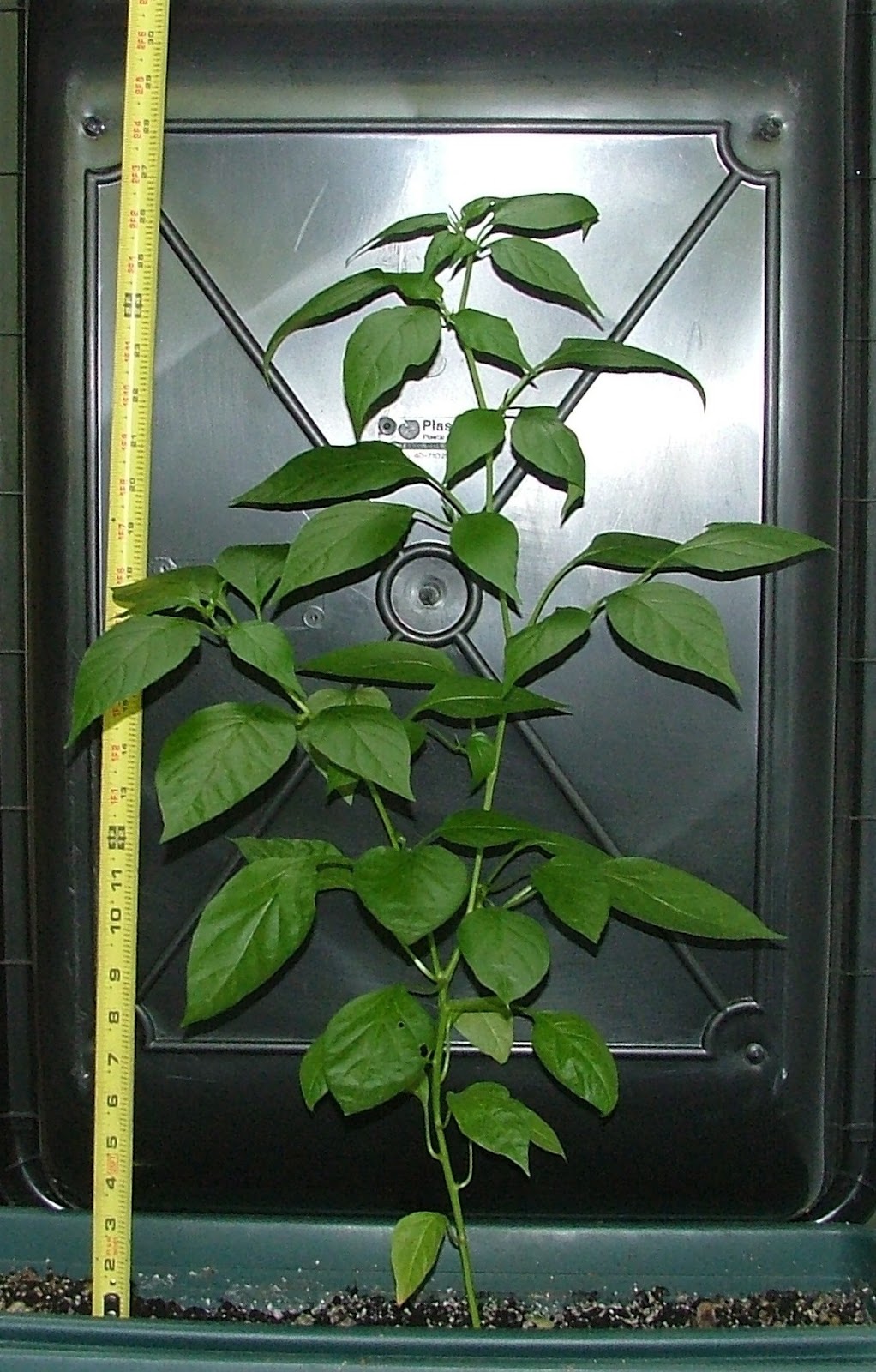
These pepper plants were grown under a sky light in a poorly ventilated garage last summer. Day time temperatures averaged over 85 degrees. The plant that was plugged in using Earth & Grow grew much healthier, producing more branches and dozens more flowers than the control, while showing little if any signs of heat stress throughout the 8 weeks.
The pepper plant that was not connected to the Earth was clearly affected by the heat and lack of air flow in the garage. It produced dull, wilted leaves and stunted growth. This experiment clearly demonstrates the benefits of reconnecting a plant to the Earth when grown in an indoor environment.
Day 1
Week 5
Week 8
Friday, March 9, 2012
Can Plants Think, Communicate, and Remember?
In a new study, scientists have found a cabbage relative capable of remembering and responding to information. Plants are able to remember information and react to it, thanks to an internal communications system that can be likened to a central nervous system in animals, according to a new study by a Polish plant biologist.
Plants "remember" information about light, and a certain type of cell transmits that information, much like nerves do in animals.
In the study, which was published in the early online version of the journal Plant Cells July 16, the researchers found that light shone on one leaf of an Arabidopsis thaliana plant caused the whole plant to respond. The response lasted even after the light source was taken away, suggesting the plant remembered the light input.
"The signaling continues after the light is off; it is building short-term memory," said the lead author, Stanislaw Karpinski, in an e-mail message. "The leaves are able to physiologically 'memorize' different excess light episodes and use this stored information, for example, for improving their acclimation and immune defenses."
In the video below Stefano Mancuso talks about the roots of plant's intelligence at the July 2010 TED Lecture in Oxford, England.
Below is another video on plant intelligence from the BBC.
Saturday, March 3, 2012
Electricity Running Through Wire Creates Electromagnetic Field
"When an electrical current flows in a wire, the movement of the electrons produces a similar field in space, but one that is oriented around the wire. If the current is a DC (direct current), the magnetic field is steady, like that form a permanent magnet. The strength of the magnetic field depends upon the amount of current flowing in the wire--the more current there is, the stronger the magnetic field will be. If the current in the wire is fluctuating, the magnetic field will have the same fluctuations." (http://tuberose.com/Electromagnetic_Fields.html)
Tuesday, February 7, 2012
Earth & Grow's Effects on Bean Sprouts
In this informal experiment, a friend plugged in two different sets of bean seeds from the same package.... The bean sprouts on the left were plugged in using an Earth & Grow plant grounding device. The bean sprouts on the right were not.
We are still not 100% sure how reconnecting plants to the Earth affects them in every situation. Some plants germinate faster and emerge through the soil strong, stocky, healthy and vibrant. Others prefer to be plugged in as young seedlings. Honing in on how the Earth's energy affects every plant, in every situation, during each stage of growth, is a very exciting challenge that we welcome with open minds!!
Wednesday, January 25, 2012
The Earthing Institute Sponsors A Proof-of-Concept Sunflower Experiment
Gary E. Schwartz, PhD. at the University of Arizona successfully replicated our cut sunflower experiment! By performing a double blind proof-of-concept study grounding cut sunflowers, Dr. Schwartz observed remarkable benefits. He states that the grounded sunflowers lived for an additional 10 days longer than the sunflowers that were not connected to the Earth. The grounded vase's water remained as clean and clear as the first day he filled the vases. We have been amazed by these results since we first performed this experiment in 2009 and are very excited to see them replicated by a university researcher.
After presenting our findings to Clint Ober and the Earthing Institute during the spring of 2011, they were kind enough to sponsor this study to see if our results could be replicated... and it worked!
Earth & Grow kits will be ready for sale in 2012!
Tuesday, January 3, 2012
Dwarf Blue Spruce Springs Back to Life... In the Middle of Winter!
This informal experiment was performed during December 2011. This was our Christmas tree. We plugged it in using a Earth & Grow prototype to see what would happen...
We have observed pines regrowing when brought into warmer growing conditions before... but never anything like this!!
Wednesday, December 21, 2011
Earth & Grow Prototype Keeps Tulip's Vase Water Clean, Clear & Odor Free!!
Tuesday, December 13, 2011
Billions of Plants are Disconnected Around the World
Most civilized societies today have become focused on insulating themselves and other organisms from the “unsanitary” Earth in order to have “clean” controlled living environments.
Humans wear insulated shoes, live in elevated homes, drive in cars, and live completely disconnected from the Earth.
After the horticultural explosion of the Victorian period, greenhouses and indoor growing became very popular. Eventually new techniques utilizing heating and artificial lighting to grow “controlled” plants indoors were developed.
Today, billions of plants have become insulated from the Earth with the wide spread use of plastic pots.
Disconnected Pepper Plants
Monday, November 28, 2011
Dr. Christy Westen Presents our Plant Grounding Experiments at the 2011 Longevity Now Conference
Dr. Christy Westen presents our sunflower and daffodil bulb experiments at the 2011 Longevity Now Conference. The experiments on grounding sunflowers and other plants have amazing parallels to grounding humans.
Friday, October 21, 2011
Plants Are Very Sensitive Organisms
"Plants, being sessile organisms, are exposed to external factors that can be stressful in such a way that growth, development, and reproduction or the yield of crops become compromised. Expanding extensive physiological studies, the last decade has seen a focus on genes and biochemical pathways that determine whether plants are sensitive or tolerant to the many different stress factors: heat, cold and freezing, drought, salinity, flooding or oxidizing agents. Recently, most emphasis is being directed towards an understanding of the mechanisms through which plants recognize external conditions, and on the signaling pathways that initiate protective reactions." (http://onlinelibrary.wiley.com/doi/10.1002/9780470015902.a0020087/abstract)
External conditions affect growth, development and productivity of all plants. Under environmental stresses, plant development is adaptively modulated. Stresses can trigger a wide range of plant responses from altered gene expression and altered cellular metabolism to changes in growth rates and crop yields. "This modulation is also influenced by the steady-state balance (homeostasis) between reactive oxygen species (ROS) and phytohormones. Frequently observed symptoms in plant stress adaptation responses include growth retardation, reduced metabolism and photosynthesis, reallocation of metabolic resources and increased antioxidant activities to maximize plant survival under adverse environmental conditions. As a result of environment stress reactive oxygen species (ROS) levels can rise disproportionately, ultimately leading to oxidative damage and cell death" (Van Breusegem & Dat 2006)(http://onlinelibrary.wiley.com/doi/10.1111/j.1365-3040.2011.02324.x/full)
Our research on Earth & Grow's effects on plants has concluded that grounded plants appear more healthy and vibrant, increase growth rate and crop yields, increase metabolism and photosynthesis, and "de-stress" plants exposed to adverse environmental conditions.
When we disconnect plants from the Earth and place them into pots, we are instantly putting them into a stressful environment. When we reconnect plants to Earth, their cells return to a homeostasis "balance" which increases efficiency.
Saturday, September 17, 2011
What do Plants and Radios Have in Common?
When you tune a radio receiver to 107.7 MHz on your radio
tuner or bandwave, you match the wave length or frequency of 107.7 MHz of the
radio transmitter. This causes the receiver and the transmitter to vibrate and communicate
at the same frequency or band wave; allowing you to hear sound. Living
cells behave similarly to a radio transmitter and receiver.
In 1929 a Russian engineer named
Georges Lakhovsky did research into the electrical nature of plant
life. "He postulated that all living cells (plants, people, bacteria,
parasites, etc.) possess attributes which normally are associated with
electronic circuits. These cellular attributes
include resistance, capacitance, and inductance. These 3 electrical
properties, when properly configured, will cause the recurrent generation
or oscillation of high frequency sine waves when sustained by a
small, steady supply of outside energy of the right frequency. This effect is
known as resonance. In electronics, circuits which generate these
recurrent sine waves can be called electromagnetic resonators, but more
commonly they are referred to as oscillators. Lakhovsky tells us that not
only do all living cells produce and radiate oscillations
of very high frequencies, but they also receive and respond to
oscillations imposed upon them from outside sources. This outside source of radiation
or oscillations are due to cosmic rays which bombard the earth
continuously. This stupendous realization, achieved during the golden years of
radio, not only led to a new method of healing by the application of high
frequency waves, but broadened appreciation for the newly emerging field of
hidden science known as Radionics or Radiathesia."
(http://www.electrocultureandmagnetoculture.com/history.html)
"His research concludes that when these outside sources
of oscillations are in sympathy, that is they are exactly the
same frequency as that produced by the cell, the strength and vigor of that
cell will be reinforced and become stronger. If, on the other hand, these
outside frequencies are of a slightly different frequency, rather than
reinforce the cell's native oscillations, they might dampen or weaken them,
resulting in a loss of vigor and vitality for that cell. The cells of disease
causing organisms within an infected person, produce different frequencies than
that of normal, healthy cells. For people or plants suffering from disease
conditions, Lakhovsky found that if he could increase the amplitude (but
not the frequency) of the oscillations of healthy cells, this increase would
overwhelm and dampen the oscillations produced by the disease causing
cells, thus bringing about the demise of the disease causing cells trying to
set up shop in the body. If he pumped up the amplitude of the disease causing
cells, their oscillations would gain the upper hand and cause the
person or plant to become weaker and more ill. Lakhovsky viewed the progression
of disease as essentially a battle between the resonant oscillations of host
cells versus the oscillations emanating from pathogenic organisms."
(http://www.electrocultureandmagnetoculture.com/history.html)
Monday, August 22, 2011
George Starr White, the Pioneer of Grounding "Earthing" Plants
"Dr. George Starr White was one of the first to
experiment with ground rods and plants, as early as 1940! Running copper wires from a grounded
copper rod into a series of potted plants, Dr. White found that this
simple arrangement greatly stimulated the life processes of his test
plants. Wired plants grew taller and flourished. It was remarked that
these plants produced better foliage, more beautiful flowers, and more
succulent fruit."
Dr. White, in his early investigations, established
that metal grounds enhanced the life force in plants. His early
experiments with natural earth currents revealed that plants need specific
ground currents by which their life force is greatly magnified.
"Plants absorb gases and mineral waters only because
they are biodynamically activated by an external energy. These studies and
others show that plants function because they first absorb radionic currents
from the ground and from space. Vegetative life functions all but cease in the
absence of radionic currents. In this vantage, we study the processes
which precede plant metabolism. Indeed, we will learn that the radionic earth
currents comprise the fundamental nutritive need of plants. We will therefore
focus attention on the energetic precursors to plant life, the radionic currents
which raise vegetative forms up from mineral matter. (http://journal.borderlands.com/2000/plants-and-radionic-currents/)
Thursday, July 14, 2011
Cut Rose Regrows Leaves!
Without changing the water or adding any fertilizer, this rose stem regrew it's leaves!!
We purchased a beautiful peach rose from a local florist. She told us it was only going to live 5 days. So, we decided to plug it in. This was the second rose we experimented with. Instead of lasting 5 days it lasted 17! Then regrew its leaves and lived for another month!!
Thursday, June 23, 2011
Earth & Grow Mitigates Alternating Current (AC) in Plants
The Oscilloscope reading on the right is grounded and the reading on the left is not grounded.
The electrical readings below show what happens after someone touches the plant's leaf. The grounded plant is barely effected by the stimulus, while the disconnected plant is significantly increased.
Friday, June 10, 2011
Grounding Plants Explained
Earth & Grow's Co-Founder and Electrical Engineer, Michael Corsi, explains how the Earth & Grow device works using a multimeter.
Friday, June 3, 2011
The Modern Day Electrical Environment
The electrical fields on Earth affect the atmosphere and environment around our planet. All organisms have attuned their biology to the Earth’s direct current (DC) electrical field that has a frequency of 7.5 - 8.0Hz, otherwise known as the Schumann Resonance.( Adkins, Charles. ‘Barefoot Technology.’ July, 2010.) <http://thebiotitan.blogspot.com/2010/07/barefoot-technology-caveman-lesson-to.html>
The power distribution systems around the world use 50 - 60 Hz alternating current (AC). Alternating current is foreign to all organisms’ biology and is being researched as a factor in a variety of human stress-related responses and other biological complications. (Ober, Clinton. Earthing: The Most Important Health Discovery Ever? Basic Health Publications, Inc., 2010.)
Wednesday, May 25, 2011
Daffodil Bulbs Benefit from Being Reconnected to the Earth
This experiment was conducted in March of 2011. We chose to use our own counter top to demonstrate how grounding benefits plants grown in typical home settings. The bulb on the right was reconnect to the Earth using a Earth & Grow prototype. Our series of photos is below.
Day 1
Day 5
Subscribe to:
Posts (Atom)